# Advantages
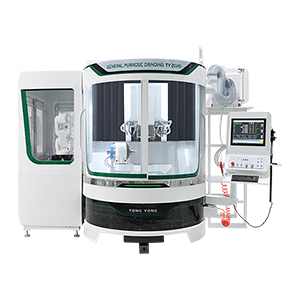
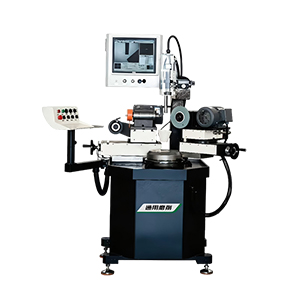
High Machining Accuracy: It delivers excellent dimensional, geometric and positional accuracy. Dimensional accuracy can reach ±0.01 mm or better, and surface roughness ranges from Ra0.8 to Ra0.2 μm, meeting the machining requirements of diverse precision parts.
Wide Range of Processable Materials: It can machine materials of various hardness, including hard‑to‑cut materials such as hardened steel, cemented carbide and ceramics. Grinding serves as the primary machining method for high‑hardness materials.
Excellent Surface Quality: Ground surfaces feature low roughness and favorable surface integrity, effectively improving the wear resistance, corrosion resistance and fatigue strength of parts.
Capability for Complex‑shape Machining: By adopting grinding wheels of different profiles and corresponding grinding processes, it can process parts with external cylindrical, internal cylindrical, flat and formed surfaces, as well as special profiles such as gears, threads and splines.
# Limitations
Relatively Low Machining Efficiency: In grinding, large contact area between grinding wheel and workpiece brings concentrated cutting force and heat, which accelerates wheel wear and requires frequent dressing or replacement. Limited feed rate and cutting speed result in lower efficiency compared with turning and milling.
High Processing Cost: Grinding wheels are costly. Special‑purpose grinding machines are expensive with high maintenance expenses. Besides, large quantities of cutting fluid are consumed during grinding, raising processing cost and increasing difficulties for environmental treatment.
Restrictions on Part Structure: Sufficient space must be reserved for grinding‑wheel movement. Grinding is difficult to apply to parts with complex structures and narrow internal cavities. Meanwhile, it demands uniform material hardness of workpieces; otherwise machining accuracy and surface quality will be compromised.